An impacted tooth is a tooth that remains hidden from view
within the jawbone even though it has reached its normal
maturity. The most common impacted teeth are wisdom teeth.
However, premolars, canines, or, rarely, extra teeth can also
remain impacted.
Impacted teeth are often asymptomatic and go unnoticed by
patients. Therefore, they can only be detected through
radiographic examinations during routine dental checkups.
In Which Situations Should an Impacted Tooth Be Extracted?
If it causes gingivitis
If it puts pressure on neighboring teeth
If it causes pain
If there is a risk of cyst formation around it
It has the potential to come out but if it will cause
problems if it continues
How is Impacted Tooth Extraction Performed?
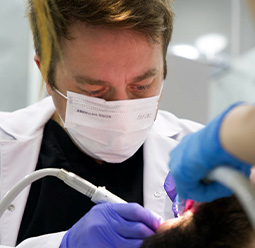
Impacted tooth extraction is performed under local anesthesia.
The area is completely numbed before the procedure, so the
patient feels no pain or discomfort. During the procedure, only
tactile sensations such as pressure and pushing or pulling may
be perceived, but these sensations are not uncomfortable.
Depending on the tooth's position, the bone tissue is lifted and
the tooth is surgically removed. The procedure is usually
completed quickly, and the area is closed with stitches.
Things to Consider After Impacted Tooth Extraction
The tampon placed after the extraction should be discarded
after approximately 30-45 minutes.
You should not eat or drink anything until the numbness
passes.
Hot food/drinks should be avoided for the first 24 hours,
and soft and warm foods should be preferred.
The operated area should not be chewed or pressure should be
applied to it.
The medications recommended by the doctor should be used
regularly, and oral hygiene should be taken into account to
prevent the risk of infection.