Prosthetic dentistry is the general term for procedures aimed at
restoring the function and aesthetic appearance of lost teeth.
Missing teeth negatively impact not only chewing and speech but
also self-confidence and social life. Prosthetic treatments are
designed to provide patients with a comfortable life.
Prosthetic treatments are performed by dentists who specialize
in this field. These dentists, known as "prosthodontists,"
ensure functional and aesthetic harmony in all prosthetic
applications, whether fixed, removable, or supported by
implants.
Who is it suitable for?
Those who have missing teeth
Those with aesthetic gaps in the mouth
Individuals who feel weakened in functions such as speaking
and chewing
Patients with teeth that need support after root canal
treatment
Older age group individuals who experience tooth loss with
age
Fixed Prosthetics
Crowns: Covers broken, decayed or weak teeth, restoring
their function.
Metal-Supported Porcelain: Thanks to its durable structure,
it is frequently used in back teeth, but it is limited in
terms of aesthetics.
Zirconium Coating: It is the closest alternative to the
natural tooth appearance thanks to its light transmittance.
Ceramic Veneers: These are the most aesthetically advanced
fixed veneers and are preferred for front teeth.
Bridge Application: It is a classical prosthesis method that
is made by taking support from healthy teeth on both sides
of the missing tooth.
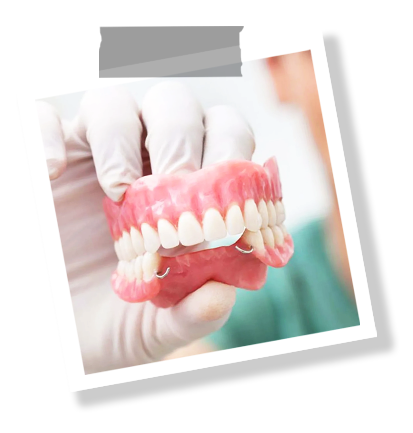
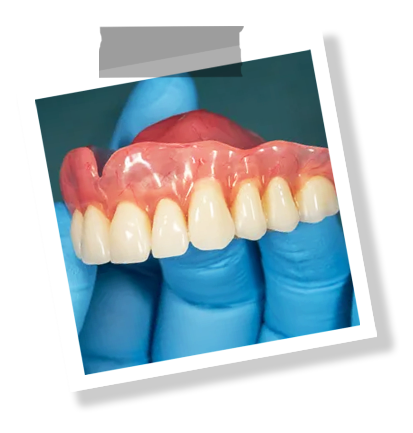
Removable Dentures (Palate Dentures)
Provides economical and quickly applicable solutions
It is preferred in all mouths with no teeth.
Restores speech and chewing function
Protects facial aesthetics and supporting tissues
Implant-supported Prosthetics
Fixed Implant-Supported Dentures: 4-8 implants are placed in
the jawbone and fixed teeth are made on them.
Removable Implant-Supported Dentures: Suitable for
individuals with less bone support, with increased retention
with 2-4 implants.
Can be produced with materials such as metal, ceramic and
zirconium
Prevents bone loss and provides a long-lasting solution
How Does the Treatment Process Work?
Intraoral analysis and x-ray imaging are performed during the
first examination.
Deciding which type of prosthesis is suitable
A personalized plan is made by taking mouth measurements.
Prosthesis production is carried out in the laboratory.
Permanent application is made after the trial and adaptation
stages.